.svg)




Key Takeaways

- The best supply chain visibility management software goes beyond simple "track and trace" by using AI, machine learning, and real-time data (like weather and traffic) to proactively resolve issues and reduce costs.
- Implementing visibility software breaks down data silos and automates manual processes, leading to improved on-time delivery rates and significant savings on freight spend.
- In a volatile market, high-level visibility is a "force multiplier" that allows businesses to meet increasing customer demands for transparency while building more resilient, data-driven shipping strategies.
Gaining visibility into all parts of your supply chain operations should be your top priority for building an efficient and smooth supply chain.
Of course, knowing where all of your materials are at any given time can strain even the most experienced team. Tracking the progress of raw materials and planned supply from both internal and external sources compounds that pressure. And for those still using disconnected systems, outdated manual methods and processes, it can be almost impossible.
What is supply chain visibility software?
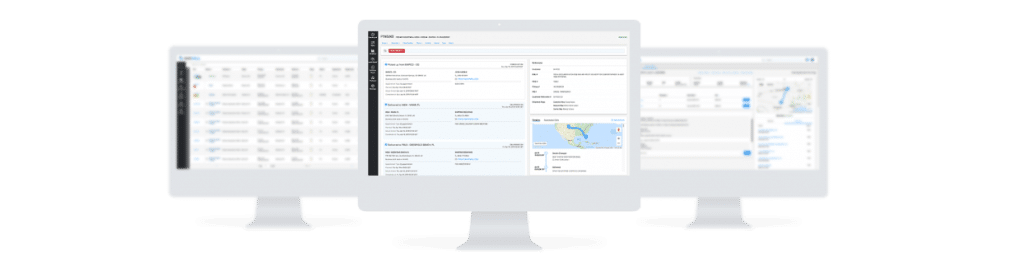
Supply chain visibility software provides logistics teams with the tools they need to gain visibility into the entire supply chain ecosystem. This provides insights to help with inventory optimization and freight management, improving forecast accuracy and delivering a real competitive advantage to shipping operations.
At the simplest level, supply chain visibility means: tracking a shipment from point A to B, while the shipper receives tracking updates along the way. This makes it easy to see where the truck is while in transit.
There are many ways to look at supply chain visibility management. And it's worth noting, that some traditional software platforms still require some manual work to get the real time supply chain visibility needed.
The best supply chain visibility software goes beyond basic track and trace capabilities and is designed around the optimization of supply chain logistics.
By breaking down data silos and combining real time tracking with advanced supply chain data and analytics, supply chain visibility software delivers accurate information and guidance on the best course of action to resolve issues. It can also improve delivery times and reduce costs.
Direct visibility connections via ELD, mobile app, API, EDI, and other means are essential to minimize tedious tracking updates and pull in data automatically for real-time tracking, while machine learning and AI can take on much of the backend monitoring, providing real time alerts should anything go off track.
Why is supply chain visibility software important?
Consumers today can place an order and immediately get updates on their package location with a touch of their fingertips. So why can’t businesses do the same? Most shipments travel thousands of miles, pass through many hands, and take days to reach their destination. This makes today’s shipment lifecycle more complex than ever.
Your supply chain must remain transparent to meet increasing customer demands. With today’s volatile market, over 20% of companies listed visibility as their greatest supply chain challenge, the highest compared to all other challenges. And more than 70% of chief supply chain officers believe that supply chain operations are a key driver for better customer service in their organizations.
What should supply chain visibility software do?
Supply chain visibility management tracks shipments in transit. But visibility technology should go beyond manual logistics track and trace capabilities. When determining which supply chain visibility software solution best fits your business needs, there are a few crucial aspects to consider.
How is the shipment physically being tracked?
Basic track and trace capabilities are included in most supply chain visibility software offerings, but the method and technology used to provide it can vary. The most effective options for determining where a shipment is located are:
- ELD tracking
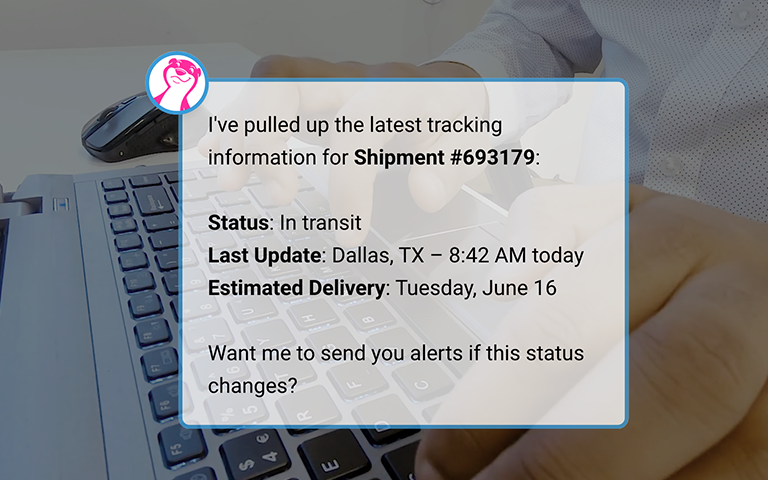
- AI assistants
- App tracking
ELD tracking provides the most accurate (and automated) results for enabling real time visibility data.
What kind of information is available?
Locating a shipment is table stakes for any supply chain visibility software. But to improve supply chain performance, consider those that also provide:
- Map overlays displaying current weather and traffic conditions
- Real-time visibility into the dwell time at upcoming loading docks
Additionally, AI-enabled platforms help you move beyond basic visibility. They are able to recommend both actions to resolve these issues, as well as analyze your data to avoid distruptions in the future.
How accessible is this information?
To optimize visibility data, information systems must communicate. A single platform that opens up end-to-end visibility across your supply chain will:
- Enable workflow automation (improving team efficiency)
- Be accessible anywhere, at any time (supporting rapid exemption resolution and remote work)
Cloud-based systems are among the more popular supply transportation management software and chain visibility software options.
What can you do with this information?
Supply chain visibility software solutions empower shippers to:
- Aggregate more real-time data
- Monitor performance
- Generate insights
Using these newly-surfaced details can improve partner and customers relationships. From determining lane pricing to more informed carrier selection, improving on-time-performance and delivery (OTP/OTD) to better managing facility selection yard management, there's no question that the right supply chain visibility solutions can enhance supply chain strategy.
Why is supply chain visibility important?
Imagine you’re planning to receive a shipment today. You’ve hired people to accept the shipment, maybe action what is inside of the shipment, even arranged warehouse storage. But when the shipment doesn’t arrive, you have little to no insight as to its location, or when it will arrive.
Sound familiar? That’s because only 35% of shippers use a transportation management system (TMS) in their supply chain management strategy.
Supply chain visibility software, paired with an advanced, data-driven shipping platform with full TMS capabilities, can help companies:
- Increase control across their supply chain processes and streamline operations planning with real-time insights
- Improve customer service with responsive ETA predictions, enabling a better customer experience and increased transparency into shipments
- Manage exceptions in the supply chain efficiently and seamlessly through machine learning
- Leverage AI-powered capabilities for faster delivery and improved service levels
- Improve carrier and partner relationships with dynamic data that provides full visibility into historical performance at every level of the supply chain
- Better understand individual carrier reliability — weighing factors beyond just price including on-time delivery (OTD) rate, damage rate, insurance status, etc.
- Easily access compliance and regulation documentation and systems designed to manage complex shipments
- Develop and implement a more confident and successful shipping strategy
How to gain supply chain visibility in a volatile market?
The only constant in the logistics market is change. As a result, most companies recognize that supply chain planning has become imperative to having a successful logistics operation. Market changes come quickly, and resilient supply chains have been the differentiating factor between companies that thrive, and those that don't.
“Our shipping and visibility platform has put our customers in a good position to weather this storm,” says Traff. “And because it’s cloud-based, it can help companies navigate future market disruptions while also de-risking their infrastructure spend.”
With an uncertain future and so many factors beyond our control, now is the time for shippers to have supply chain visibility management solutions that put power back in their hands.
How can Shipwell improve supply chain visibility and performance?
To address the problems that carriers face, Shipwell's platform focuses on innovative solutions for capacity, visibility, and carrier management, starting with timely delivery and a diversified carrier network.
Available on Android and iPhone as well as desktop, our app allows you to book and manage shipments, stay connected with drivers from pickup through delivery and automate phone calls and manual touchpoints.

How can you start shipping smarter today?
As logistics operations become increasingly complicated, it’s crucial to have all of your supply chain partners aligned to your strategy. Shipwell helps you do this with aggregated supply chain visibility tools within a single platform.
By combining a strong partner network with powerful data and analytics, you can see your supply chain clearly. Real-time alerts help you respond quickly. Transportation management helps you track and manage shipments. With smooth integration into your existing systems, it becomes a force multiplier for your digital transformation strategy.
The first step to understanding where to start is to determine which KPIs are important to your business and your team. Some examples include:
What do you want to know about your logistics operation?
This could include your on-time delivery rate, carrier performance, average rates on different lanes, etc.
How are you looking to transform your supply chain with increased visibility?
Track and trace capabilities are great for physical visibility, while a connected supply chain technology supplier could reduce inefficiencies across the team with end-to-end visibility.
What integrations do I need for a successful on-boarding?
Get your IT infrastructure team involved to determine what integrations make the most sense for your supply chain needs.
With these in mind, you’ll be prepared to determine which supply chain partners are right for you and your business. To learn more about Shipwell’s connected platform, speak with an expert today!